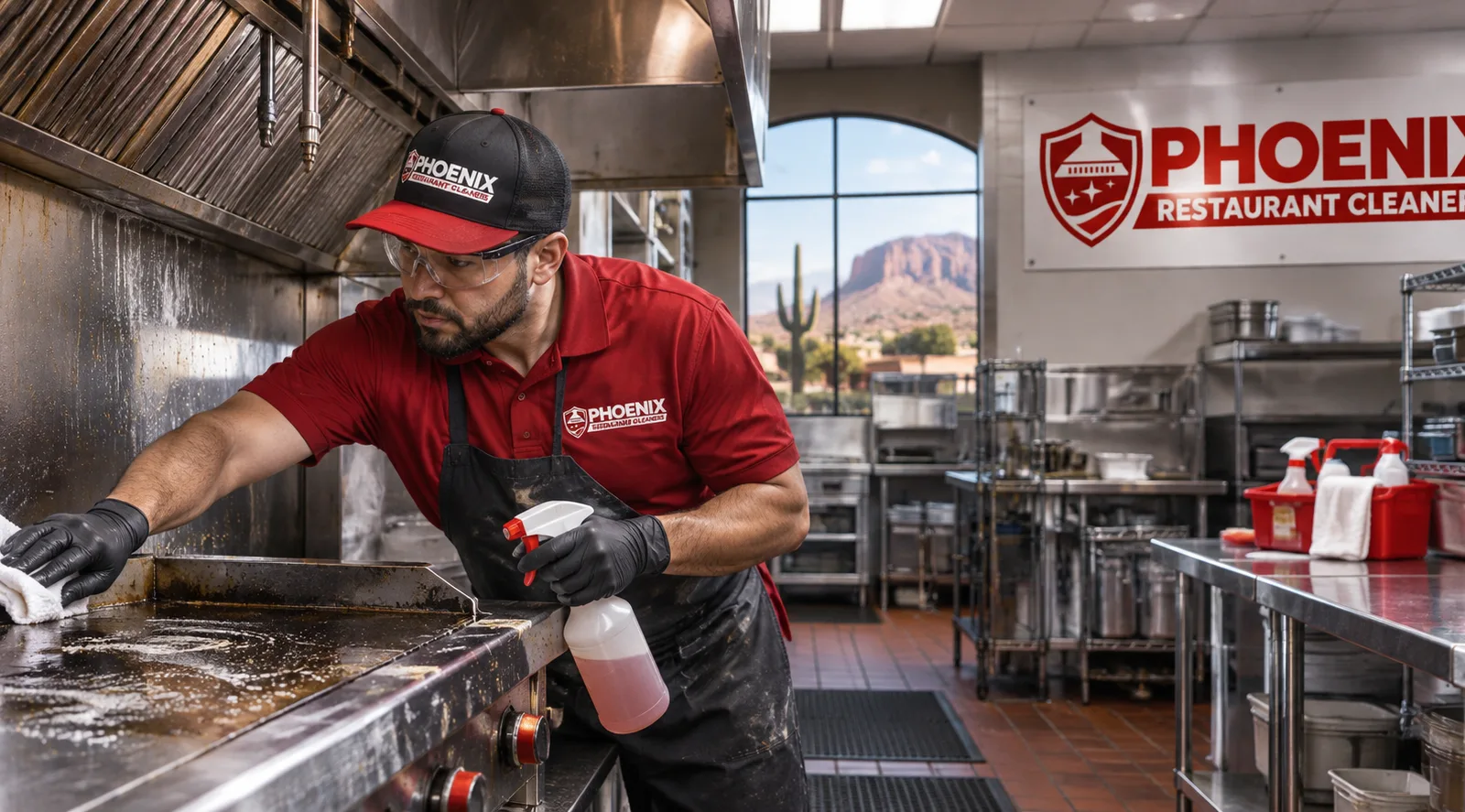
A professional cleaner degreasing stainless steel cooking equipment in an organized Mesa commercial kitchen

Mesa restaurant cleaning

Restaurant Cleaning Mesa

Detailed kitchen, equipment, dining room, and back-of-house cleaning planned around your operating hours and facility standards.

✓Written scope ✓After-hours options ✓Surface-specific methods ✓Mesa scheduling

Operational cleaning plan

Commercial Cleaning Built Around Restaurant Operations

Restaurant Cleaning Mesa requires more than a quick wipe-down after closing. Grease migrates beyond the cooking line, food debris collects beneath equipment, and frequent traffic leaves dining areas and restrooms needing consistent attention. Phoenix Restaurant Cleaners develops a written scope around your kitchen layout, service model, operating hours, and priority areas.

From our base at 920 E Madison St, Suite 5, we operate as a professional restaurant service company in Phoenix, AZ and coordinate work for Mesa restaurants. Each plan identifies the surfaces, equipment exteriors, floors, fixtures, and customer-facing spaces to be cleaned. It also sets the frequency and timing so managers know what the crew will handle on every visit.

Mesa's dry, dusty conditions can add fine grit near entrances, loading areas, floor edges, and outdoor dining access points. Monsoon winds may increase tracked-in soil during summer. A practical plan accounts for these conditions while giving grease-prone cooking areas the stronger methods and products they require.
Scope of work

What Restaurant Cleaning in Mesa Can Cover

Commercial Kitchens

Cleaning may include prep surfaces, sinks, backsplash areas, shelving exteriors, floor edges, drains, walls, and reachable areas around the cooking line. Products and methods are selected for the surface and soil involved.

Dining and Service Areas

Tables, chairs, booths, counters, host stations, hard floors, glass, and touchpoints receive attention based on customer traffic and the restaurant's opening schedule.

Equipment Care

Crews remove grease and residue from approved exterior and accessible equipment surfaces without treating electrical, gas, or mechanical components as ordinary cleaning areas.

Restrooms

Fixtures, partitions, mirrors, dispensers, floors, and high-touch surfaces can be included in the recurring scope, with restocking responsibilities clearly assigned.

Back-of-House Areas

Storage access lanes, employee areas, receiving zones, waste-area approaches, and other operational spaces can be added when they need scheduled cleaning.

Periodic Deep Cleaning

Detail work targets buildup behind movable equipment, along wall-floor junctions, beneath shelving, and in other areas that routine shift cleaning may not fully address.

Equipment care

Restaurant Equipment Cleaning Mesa Managers Can Schedule

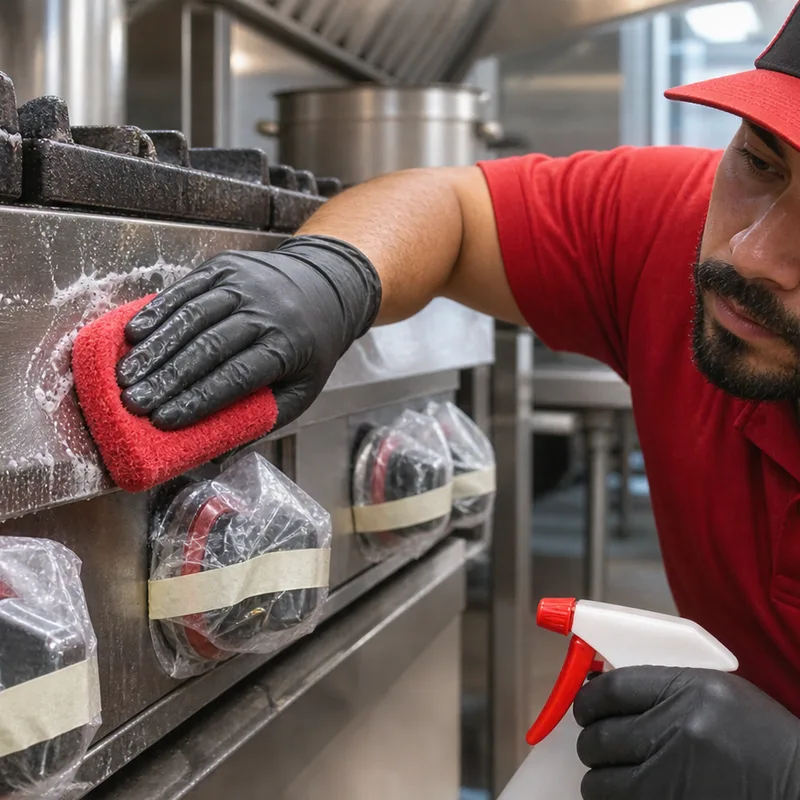
A trained cleaner using a nonabrasive pad on a stainless steel range exterior while controls and technical components remain protected

Restaurant equipment cleaning starts with the manufacturer's care instructions and a clear boundary between cleanable surfaces and technical components. Stainless steel exteriors often need food-safe degreasing, controlled dwell time, manual agitation, thorough rinsing where appropriate, and drying that follows the grain. Painted panels, plastics, aluminum, control labels, and hot surfaces may require different chemistry or handling.

Typical targets include the accessible exteriors of ranges, ovens, fryers, griddles, refrigeration units, prep tables, shelving, and small appliance stations. Before work begins, equipment should be cool and secured according to the restaurant's procedures. Crew members should not disconnect gas, open electrical enclosures, move equipment that is unsafe to shift, or clean internal mechanical parts unless that work is specifically authorized and suitable for a qualified technician.

For heavy buildup, the scope should identify whether the crew can safely access the sides, casters, undersides, and wall surfaces behind each unit. This prevents routine cleaning from being mistaken for equipment repair, fire-suppression service, or exhaust-system work.

Cleaning workflow

How a Restaurant Cleaning Plan Is Set Up

  1. Step 01

    Walk Through the Facility

    The initial review covers the cooking line, prep stations, dining room, restrooms, storage access, floors, entry points, and equipment that may need exterior cleaning. Access restrictions and sensitive surfaces are documented.

  2. Step 02

    Define the Scope

    The written plan separates daily priorities from recurring detail work. It also identifies exclusions, approved cleaning windows, water and power access, alarm procedures, and any equipment that staff must cool or move.

  3. Step 03

    Match Methods to Surfaces

    Degreasers, neutral cleaners, nonabrasive tools, microfiber materials, floor equipment, and other supplies are selected for the soil and manufacturer guidance. Chemical labels and Safety Data Sheets govern use, dilution, and personal protective equipment.

  4. Step 04

    Clean in a Controlled Order

    Crews generally work from cleaner areas toward heavier soil and from higher surfaces toward floors. Tools used in restrooms should remain separate from those used around food preparation and dining areas.

  5. Step 05

    Review the Completed Work

    A final check compares the work with the agreed checklist. Managers can report recurring trouble spots so the scope or frequency can be adjusted as operating conditions change.

Mesa scheduling

Scheduling for Mesa's Different Restaurant Settings

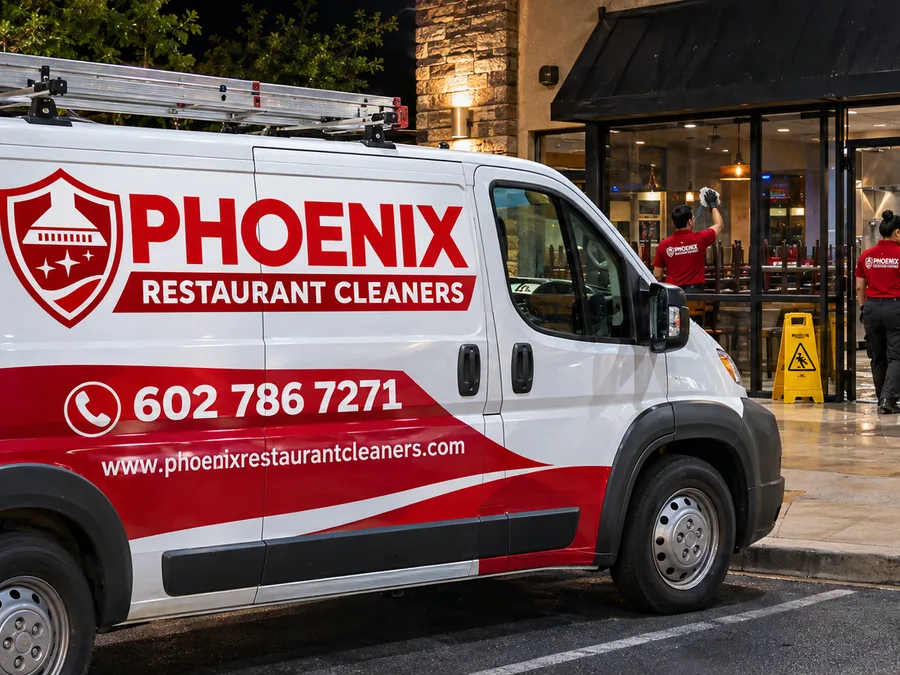
A restaurant cleaning crew unloading labeled commercial cleaning supplies at a Mesa shopping-center restaurant during a scheduled low-traffic period

Downtown Mesa restaurants near Main Street may have limited loading access, shared waste areas, or work windows tied to nearby activity and light rail operations. Cleaning plans in these settings should address entry coordination and where equipment can be staged without blocking staff or public access.

Restaurants around the Mesa Riverview area may handle large dining rooms, broad entrances, and higher event-related traffic. In Eastmark, newer commercial spaces can still accumulate grease, dust, and floor soil quickly once regular food service begins. Dobson Ranch restaurants may operate in established shopping centers where service access, shared parking, and property-management rules affect arrival and departure.

Phoenix Restaurant Cleaners can plan recurring visits after closing, before opening, or during another agreed low-activity period. The best window leaves enough time for surfaces to cool, approved products to complete their dwell time, floors to dry, and restaurant staff to inspect the work before service resumes.

Operational standards

Cleaning Standards That Protect the Operation

A dependable scope distinguishes cleaning, sanitizing, and disinfecting. Cleaning removes soil and residue. Sanitizing reduces microorganisms on an already-clean surface when an approved product is used according to its label. Disinfecting is a separate label-directed process and is not a substitute for removing grease or food debris first.

Food-contact surfaces need special handling. Products must be appropriate for the intended use, applied at the labeled dilution, and given the required contact time. Some products require a potable-water rinse after use. A restaurant's internal food-safety procedures and manufacturer instructions should guide the final process.

Mesa food establishments operate within Maricopa County's food-safety jurisdiction, so cleaning should support the facility's own compliance program rather than make unsupported promises about inspection outcomes. Hood and duct cleaning, fire-suppression systems, grease-trap pumping, pest control, and appliance repair require separate scopes and, in some cases, specialist providers. Keeping those responsibilities distinct makes accountability clearer.

Set a practical cleaning schedule before grease, floor soil, and neglected detail areas begin interfering with opening routines or closing duties.

Call for a Free Quote

Operational details

Restaurant Cleaning Mesa FAQs

How often should a Mesa restaurant schedule professional cleaning?+

The right frequency depends on cooking volume, menu, operating hours, traffic, and the amount of cleaning completed by restaurant staff. A high-grease cooking line may need frequent detail work, while walls, equipment sides, and storage areas may fit a weekly, monthly, or rotating schedule. Mesa's dust and summer monsoon winds can also increase attention needed near entrances and floor edges.

What affects the cost of Restaurant Cleaning Mesa services?+

Price is driven by square footage, cleaning frequency, current grease buildup, equipment access, floor type, number of restrooms, and the length of the approved work window. A recurring maintenance visit usually requires a different labor plan than an initial deep cleaning. A facility walkthrough is the best way to confirm a written scope and accurate price.

Can cleaning be completed after the restaurant closes?+

Yes, after-hours work can be arranged when access, alarm procedures, lighting, utilities, and secure entry are coordinated in advance. The schedule should allow hot equipment to cool and cleaned floors to dry before staff return. Restaurants in shared Mesa shopping centers may also need to account for property-management access rules.

Does Restaurant Equipment Cleaning Mesa include internal appliance repair?+

No, standard equipment cleaning does not include opening technical enclosures, repairing appliances, disconnecting gas lines, or servicing electrical and mechanical components. The scope generally covers approved exterior and accessible surfaces. Internal maintenance, hood systems, fire suppression, and repairs should be assigned to appropriately qualified providers.

Do we need to close the kitchen during cleaning?+

The work area should be out of active food production while cleaners handle equipment, chemicals, and floors. Many restaurants schedule service after closing or before prep begins. If only one contained area is being cleaned, the facility may be able to isolate it, but food, utensils, and exposed ingredients must remain protected.

Can you follow our restaurant's cleaning checklist?+

Yes, an existing checklist can be reviewed and incorporated when the tasks are safe, accessible, and within the agreed scope. The final plan should name each area, frequency, method, and party responsible. This is especially useful for multi-unit operators and Mesa restaurants that need consistent documentation across shifts.

Plan your cleaning scope

Plan a Cleaner, More Manageable Restaurant

Share your Mesa restaurant's layout, operating hours, equipment concerns, and priority areas. Phoenix Restaurant Cleaners will help define a clear scope and a schedule that fits the way your team works.